Technology will fundamentally change the way accountants and Chartered Accountants operate, the way they run business, the way they engage and the way they process things. But the one thing that it can’t replace is that human contact.
— Josh Hickford, Chief Executive of Taranaki Foundation
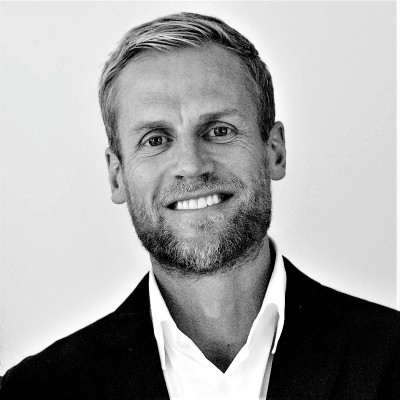
In this episode of the Accounting Apps Podcast, I spoke with Josh Hickford, Chief Executive of Taranaki Foundation, cancer survivor, social entrepreneur and quite possibly the only Chartered Accountant to compete on Survivor New Zealand. His story is not linear. It is layered, human and deeply grounded in purpose. And it highlights something I firmly believe. Accounting is a foundation skill. What you build on top of it is up to you.
Josh knew at fourteen that he wanted to become a Chartered Accountant. That early clarity took him through university, into PwC, and then into a commercial finance role at TSB Bank. Like many of us, he built a strong technical capability. Budgeting, forecasting, and working alongside executive leadership. Solid, structured experience. But life interrupted the spreadsheet when he was diagnosed with Hodgkin’s lymphoma at 28.
Cancer has a way of reframing everything.
During treatment and recovery, Josh began to see gaps in support systems. While patients often receive structured care, the ripple effect of cancer on family, friends and colleagues is far less supported. That observation became the seed for Ripple, a digital support app developed in partnership with the Cancer Society in New Zealand. It was not built because he wanted to launch a tech startup. It was built to solve a real problem.
And that is where accounting skills quietly shine.
Josh understood governance. He understood financial modelling. He knew how to build trust with stakeholders and how to present a case for funding. He leveraged his public profile from Survivor New Zealand to raise funds, even auctioning personal items from the show to generate early capital. He then worked with developers, tested user experience, secured board backing and built something that serves real people navigating incredibly difficult circumstances.
This is what I love. Accounting gives you financial confidence. It gives you credibility in rooms where ideas need backing. It allows you to turn passion into something sustainable.
Today, as Chief Executive of Taranaki Foundation, Josh is applying those same principles in the philanthropic sector. Community foundations operate on trust. Donors need confidence that their contributions are handled with integrity and directed where intended. Increasingly, that trust is supported by technology.
We discussed donor journeys and how important it is that giving is simple, intuitive and seamless. If someone feels inspired to donate, that window of motivation can be short. A clunky website, a manual receipt process, or a delayed response can derail the moment. Digital platforms such as Raisely and Stripe allow automation of donation processing and receipting, reducing administrative burden and improving user experience.
This is not about replacing people. It is about freeing them.
When charities automate repetitive tasks, they reclaim time for relationships, strategy and impact. Josh shared examples of how community foundations must be prepared for sudden surges in attention or donations. Systems must be scalable. Technology becomes the quiet infrastructure that enables generosity to flow efficiently and transparently.
But throughout our conversation, one theme remained consistent. Human connection still matters.
Josh reflected on receiving a significant donation initiated through a simple phone call built on years of trust. No app facilitated that moment. No automated workflow replaced the relationship. Technology enhanced the broader ecosystem, but it did not substitute trust.
This balance is where the future of the profession sits.
We also explored the broader role of Chartered Accountants through their involvement with Chartered Accountants Australia and New Zealand Council. Governance, advocacy and member representation are powerful levers for shaping the profession. When accountants engage beyond their immediate roles, they influence policy, standards and public perception.
The stereotype of the accountant as purely transactional is outdated. We are leaders, advisors, strategists and increasingly connectors between technology and people.
One of the most memorable parts of Josh’s story was his reference to Sir Ken Robinson’s book The Element. Finding the intersection between what you are good at and what energises you changes everything. For Josh, that intersection became community philanthropy and digital enablement. For others, it may be fintech, advisory, sustainability or education.
Technology will continue to evolve rapidly. Automation, AI, integrated platforms and data analytics will reshape workflows. But the profession’s real opportunity is not to resist change. It is to leverage it. Use technology to reduce friction. Use it to enhance transparency. Use it to create space for deeper advisory work and community impact.
Accounting is the oxygen of business. It is also the oxygen of social enterprise and philanthropy. When combined with purpose, it becomes incredibly powerful.
Josh’s journey from spreadsheets to social enterprise is a reminder that our qualifications are not a cage. It is a launchpad. And sometimes, the most meaningful ripple effects begin with a simple decision to use your skills differently.
AI-Generated Transcript
Heather Smith
Hi, I’m Heather Smith, and welcome to the Accounting Apps Podcast exploring the accounting and business apps community. I encourage you to stay up to date with the curated content I’m sharing by subscribing to the Accounting Apps newsletter and joining the Accounting Apps Mastermind group.
Today, Josh Hickford, the chief executive of Taranaki Foundation, a fellow chartered accountant and a member of the CAANZ Council joins me. With experience at PWC and TSB Bank, he has built a career across accounting, banking and leadership. In 2018, he swapped spreadsheets for a sarong as a castaway on Survivor New Zealand, Thailand. My research suggests he’s the only New Zealand accountant brave enough to balance the books in the jungle. In 2019, after his own experience with cancer, he co-founded Ripple, a New Zealand digital support app developed with the Cancer Society.
Josh focuses on community, well-being, connection and practical impact. He is also the chief executive of Taranaki Foundation, a charitable Community Foundation created for the people of Taranaki by the people of Taranaki. So for those of you who are overseas, Taranaki is a coastal and mountainous region on the western side of New Zealand’s North Island, and the landscape is dominated by a volcano Mount Taranaki. The vision of the Taranaki Foundation is to grow the prosperity of their region through community giving, partnership and philanthropy. The foundation connects donors with the people, causes and projects they care about.
Thank you so much for joining me today on the Accounting Apps podcast.
How’s your week been, Josh?
Josh Hickford
Good, another fast-paced week in the life we all live.
Heather Smith
Absolutely, absolutely.
Can you share a little bit with our listeners about your career journey, Josh?
Josh Hickford
Yeah, so thanks for the introduction. I am a proud chartered accountant, and you did touch on a little known fact. I think my claim is that I’m the only chartered accountant to ever go on Survivor worldwide. So I’ll definitely grab that and run with it. But that was a real honour to have the designation on a screen representing our profession.
How I ended up there was, I guess, that’s the story in itself. I decided I wanted to be a chartered accountant when I was about 14, which I know is uncommon, probably unusual. People going, what’s wrong with you? But sometimes the people you’re surrounded by or exposed to have an influence on where you start to hit. And I was fortunate to grow up with what he became a CEO of a big bank in New Zealand. And I said, Oh, how can I? How can I be a CEO of a big bank as well? And Kevin said to me, Oh, you become a chartered accountant. And then it doesn’t just happen from there, but that’s one way of doing it. So I said, Okay, I enjoyed accounting. I liked balancing the books, doing tea ledges, which we did back in the day, just kind of learning something, applying it to the real life, because you can actually see in the real world what you’re doing and why it matters in different ways.
And yeah, went off to Victoria University in Wellington, got my initial qualifications to become a CA, went to PwC, sort of as you do that’ll apply to Australia and New Zealand. Did the Big Four experience. Got fully qualified as a CA, and ended up working at TSB Bank, which is, fortunately head office here in Taranaki. And then, yeah, I guess I had a, for lack of a bit of phrase, a commercial sort of finance role for seven years, which ranged from management accounting to a finance manager.
But the exciting part of that role was I looked after the bank’s budget forecast month in process, but that was for the whole bank, and I, I was lucky to work with our ELT at the time and sometimes the board, so I was probably championed into a position that a relatively young and what was an experience stage, terms of in terms of runs on the board.
But yeah, I had cancer, and I was diagnosed with Hodgkin’s lymphoma back in 2017 and that really changed my life path quite considerably to where I am today. And the description you just read out is a guess, a bit of a product of getting cancer myself. And I was only just speaking this morning to a cohort of year 11 future leaders in our region on sort of my story, and the stories associated with it, and how we can all move forward with whatever we’re doing. And it made me reflect, which is quite timely for this on on that journey. I’m still a proud CA, but I’ve managed to work out that my skills and, I guess, passions more so aligned with financial, foundations and that CA, kind of language is quite powerful when you take it into community and you lay it across digital technology, charity, our mana, whenua. The world’s kind of your oyster sometimes, if you if you allow it to show you a few different paths.
Yeah, my past been far from linear, and I love it, and I love my job that I actually get paid for, but I do a lot of other stuff, like yourself on ca and Z Council. I do that because I love the profession. 140,000 members, and our particular membership bodies pretty, pretty big group of people. So I think the power and the profession, and what we all can achieve is significant.
Heather Smith
Well, you are a great advocate for Chartered Accountants worldwide and for the accounting profession. And funnily enough, I decided to become an accountant when I was 14 too. So that’s why I adored my teacher, and I adored the tranquillity of a tea balance, which, there you go, and just stuck with it. And it’s interesting, I was at a I was, I was a counsellor at the 25 year milestone event in Brisbane last week, and went round the room and spoke to a lot of people, and afterwards, someone messaged me to say, like I went and spoke to her mother several times, and to say that her mother was surprised that all the accountants were different in the room, and you’ve not been telling them that we are all different. But still, the public perception is there’s one journey, there’s one one road, and there are many roads.
Josh Hickford
Yeah, yeah, you are right. And that stereotype has been around for quite a while, and it doesn’t you just have to look at some of the firm names, especially of the milestone ones, and they rattle off their history, and it’s sort of a whole lot of last names. There’s certain names which are probably a lot of male dominated areas as well. So that’s the profession has changed a lot, which is great to see. But I try and avoid the word accountant, if I can, apart from chartered accountant, that’s important. But yeah, we’re much more than that. And CAS and I guess, accountants at large, leaders. We’re decision makers. We can inspire people. We can help with stuff much, much more, beyond just our tea balance sheet.
Heather Smith
Absolutely, you’re a great advocate. You’ve got all the ideas about what we can do. So let’s talk about ripple, the digital support app that you developed with the Cancer Society in New Zealand.
How did your CA skills help you conceive, fund, and launch a tech product?
Josh Hickford
Yeah, good question. I came into that with very little experience in that. But I think most entrepreneurs or tech minds have an idea. Then you go, Well, how can this idea percolate and go from being an idea to a reality? But obviously there’s a process there. But my one was to solve a problem. And I think a lot of the great apps in the world and in the financial sort of realm, to solve a problem. You look at Xero, for example, Rod Drury was just named New Zealand of the year last week in Auckland. And it’s probably overdue, to be honest, but what he and his team and everyone else
Heather Smith
Totally overdue.
Josh Hickford
When he, when he, when he, when I saw him and he they read out, everyone’s like, Oh, feel like, yeah. Zero has been doing pretty, pretty good stuff for a little while. But you know when, when kudos comes, it’ll come eventually, but that’s a great story in itself. But they really solved, and he spoke on stage about solving what felt like quite a simple problem, but no one had done it so with ripple having had cancer myself at a relatively young age, which is the word Young’s relative, but I was 28 at the time, not something you expect. I went through that process and journey, had chemotherapy and radiation, managed to get out the other side relatively unscathed, had a good, strong support network around me, but I realised that not everyone has that.
So I wanted to create something that not a patient could benefit from, because a lot of support services in both Australia and New Zealand are hamstrung by resources. The patient centric. They’re there for the person that has the disease or the cancer, which makes sense. But what about the Father? The mother, the sister, the brother, the workmate, the Son, the person across the road, if they have a question or want to see some information, there’s there’s actually very little places, you know. So that was my idea.
So I sort of fundraised in earnest. Survivor New Zealand was useful. Had a bit of profile, so I leveraged off that. I sold everything I wore on the island to survivor super fans from all around the world, which baffled me. But you know, if someone’s going to pay 1000 Dollars for your shorts and your singlet and be my guest. So I learned how to fundraise quite well, quite quickly. So that was a key ingredient to getting some funding off the ground without having to, I guess, go through some of the more traditional channels.
So the beauty of that was I built up awareness and a groundswell around this idea. And then as that progressed, I worked with the Cancer Society, and then, sort of a local agency as well, to build out a brand identity that stood on its own. It had a story behind it. Built a website, and all the associated parts of creating, not just words on a paper, but you can actually shouldn’t have a bit of emotional attachment. And the word ripple came out because, you know, when someone gets cancer, it’s cliche, but it’s true. Drop a people in the pond, and the ripples are felt far and wide. And cancer is like that. It’s like, it’s probably more like a bomb, to be honest. But the ripple effect of cancer goes much more than just the patient.
I had a little bit of governance experience as well. I guess backing if you’re a chartered accountant and you’re anywhere near a board, and quite often, they’ll go, oh yeah, get on here. Help us with the financials, or be the treasurer, or something like that. So I think listeners that will resonate regardless of whether you are a numbers accountant or not. So I ended up working, getting onto the Cancer Society local board, and at my first meeting, I managed to inspire them with this proposition to invest another $80,000 into the money I’d raise.
So we had a good sum over six figures to actually do this properly. And the good thing was, because it’s a social enterprise, we went out to market to some app developers, mostly across the North Island of New Zealand, to brief it out on going, well, what does this actually look like from a user interface? What’s that user experience? And if someone uses it, what do you actually want them to kind of walk away with or get that benefit? So we went through all of that, and it was a it was a really amazing experience to go through, because I’ve just lived it.
So I knew what we needed to do. I knew what I hoped a user would get, and we sort of had the money, if I say that, to do it. So it was all there. And we went through that process. We had. We were fortunate to do some UAT testing with people that had cancer and that had experienced a family member with it. So we kind of had all the ingredients there and but I think in my day job and that it’s about getting the right people on the bus and inspiring people. And whatever your skill set is, whether you’re an accountant or not, if there’s an idea who are the who, who’s in your who needs to come onto your team to make it happen.
If you look at a rugby team, or a rugby union team in Australia, that you’ve got a full pack, you might have front rows, their role is very different, to say, a winger that needs to catch the ball, maybe evade some people and hopefully score a trial pass it back inside to one of the forwards. So not everyone’s made equal has the same required skills on a team, but they’re all equally as important. So I just looked to build up my team as I went and learned quite fast.
Most entrepreneurs all, you don’t need to know everything, and if you do fail, that’s okay, but try and fail fast, rapid acceptance, and then kind of move on and learn as you go. But that’s probably the fast paced version of of Ripple. It was really to solve, or to provide a solution to people didn’t have and that didn’t. It doesn’t at the time in New Zealand, in an organised way. It was sort of done on social media, very ad hoc. You had to go search for it. And if you don’t know what you don’t know, told you’ve got cancer, you will never…
Heather Smith
Yeah, wow, that’s such a journey, and it’s really exciting to be sort of part of those projects and use your own skills. And who knew that there was you could auction off the clothes you wore on survivor, that that was a shock to me.
Josh Hickford
Yeah, yeah, the ways we raised money for that, or were, yeah, a little bit unconventional, and then this and that, but yeah, whatever it takes, really, I realised that some things had value and that to some people, mostly in America, they highly value that. So I strike struck while the iron was hot on that one.
Heather Smith
Yeah, well done. Well done. I’m really thinking quite innovatively and out of the box there. So in your current chief executive role at Taranaki Foundation,
How do you see digital tools changing how community foundations operate?
Josh Hickford
Yeah, good question. So firstly, for our listeners, in Australia and New Zealand, there’s community foundations in both countries. In New Zealand, we have 18 of them. In Australia, you’ve probably got three or four times as many. It’s. It’s population based, to some extent, but it’s really community driven. So the nexus of our Community Foundation is the local people in that particular area. Create it because it’s run by locals for that local community. So that’s how it works quite well.
So the needs of each community do range a little bit, but in philanthropy and giving, some of the trends we’re seeing, people want to do something, usually pretty quick. And if, if they get inspired to give to a cause or a project that they might see somewhere they they that trigger sometimes has a lifespan which is sometimes very short. So you want them to find where they need to go pretty quickly. So having a really attractive, looking and easily accessible website, while that’s fairly simple, technology can be poorly done. I’ve seen it poorly done before, and the user experience across the website kind of just leads to a potential donation not happening.
So allowing people to get where they need to quite quick, and then after this they’re ready that what we call a donor journey, that where they find where they need to go, be it a project in three or four clicks, and they’ve made their contribution to whatever that may be, and they’ve also get the automatic receipt. Because the hard part with charity, as you grow is actually just servicing those that want to engage with you. And donation receipts is a classic that can kill a lot of time. And little charities don’t have automation, then automation is not too difficult. You’ve got some really good software solutions like the for razor, Lee, for example, and Stripe, that integration is pretty good. It’s you can embed it on your website. You can tailor it specific to a particular cause, fund or or project as well. But some of these technology solutions are not overly complicated or difficult, but it’s a matter of, I guess, getting them embedded into your system in a way that works for your audience.
But the number one output of all of that is trust and credibility. Because then if you have a good platform that’s trusted, people have used it, and it usually leads to larger donations that don’t come through a technology platform. Because if someone’s giving you $150,000 they don’t through a technology platform, whether we like technology or not. I had that it’s year end, our financial year end here in New Zealand on the 31st of March, being today. And I had an accountant, a well known local FCA, ring up myself two days ago saying that donor, we talked to Josh, he’s ready to do his donation like today. And I was like, 150 K, he’s paying it. I was like, Oh, wow. And then in this particular accountant said, Oh, what’s the process from here? And I said, Well, normally we have an agreement. Normally I would know the donor’s name, so we had none of that. But barriers. We don’t want to put up any barriers. So in that instance, it was as simple as writing a quick letter on our letterhead, sending it off, and the money came through amazingly. But technology, while technology, didn’t feature in a obvious way, then that outcome and experience was a result of building that trust over time, where an accountant can just ring me say, Hey, we’re looking to transfer $150,000 can you give us the details so that wouldn’t have happened kind of without having a good base behind it?
Heather Smith
Yeah, absolutely. So you’re saying that it’s important to have an easy to navigate website, probably across both desktop and mobile and make that donation receipt process really easy. I know when I’ve talked to small businesses that are looking to grow and looking to do similar things, I’m like, your processes have got to cope with a celebrity coming here and endorsing you. And if you get 500 times whatever is happening at the moment tomorrow, are they going to cope with that? Because, you know, that’s the type of when you’re in that space, you can get these crazy endorsements that you just didn’t know are coming. And if you’re if your office is covered in post it notes it’s not going to survive.
Josh Hickford
It’s that’s actually a really good example that I’ll probably add into my toolkit, because that’s where most charities Can’t they would not handle that volume that what I described. Then, oh, sorry, with raisley and our online sort of donation process could handle that overnight, so it’s future proof. But if I look at Christchurch in New Zealand that had the earthquakes back in 2008 and the mosque shootings a little while ago as well, I know that some of those systems, of the charities that lead the public, I guess, call to action. For contributions. Didn’t quite have those processes in place, and they were absolutely overwhelmed, and it took them months, if not years, to recover fully, because it just absorbed them. Yeah, some quite active basics processes, which seems that we’re talking about AI and whatnot, but it’s simpler than that. It’s just having some really basic, smart automation that can just future proof you, but a celebrity
Heather Smith
endorsement be great. Yeah, I always call that my Kim, Kim Kardashian scenario. But we had an interesting scenario here in Australia. We had a few years ago, we had some terrible bushfires, so someone set up a GoFundMe campaign and then a well known celebrity comedian pushed it and talked about it. But the problem was, the GoFundMe campaign was just for one fire station, just to replace the like the trucks at that fire station the way it was all termed out, and the fund raised a tonne of money because of her endorsement. And then they’re like, the legalities are, we can only do this with it. So it was a real when people do do things like that, you want to make sure that everyone’s doing it with good intent, but the money is going to go where you actually want it to go. So that was an interesting scenario that we saw play out.
Josh Hickford
Yeah, that’s it. I could see that happening almost accidentally.
Heather Smith
Oh, it was purely accident. It just go fund make a campaign seem to just erupt out of everywhere at the moment, don’t they? And that one was of pure good intent, and could have done great and did do great things, but it just got way, way too big for what it was like. Anyhow. Let’s move on.
You survived 15 days in the Thai jungle. From what I can tell, what was it like to be completely disconnected from technology?
Josh Hickford
Yeah, there was an extreme detox you. Yeah, there and well, technology, coffee, all the, all the stuff you get used to, but your technology was the number one. And even having a watch, I was allowed to take on a non digital watch, because digital one would be useless after a few days anyway, because the battery would run out. But yeah, there was, there was quite an experience, because not only did you have no technology, you’re cut off from the outside world, but you’re with essentially strangers that you’d never met, lot of downtime. But yeah, it was quite a bizarre experience. It did show that you actually don’t rely on much assuming you’ve got a safe environment, somewhere to sleep and and some a little bit of food you don’t have much on when you’re playing survivor. But yeah, that was a that was a huge shock. And even turning the phone back on when I unfortunately got voted out, it just went crazy, to the point where I was like, I can’t even, I’ll just delete all this. Because it’s been amazing how much backlog there is when you haven’t been on something for so long, which would show how much we actually consume in a day. Or even,
Heather Smith
yeah, even when you go away for a conference, you come back and there’s like, Oh no, my inbox is full. But that that is really interesting, experiment, experiment and experience, isn’t it? I And, yeah, it does make sense that they send you. Well, I didn’t even know they send you in with a watch. I’m not that close to the show, but oh, and I know I was going to say, went and searched your performance on survivor, and it said you didn’t lose through making many any mistakes. It was that you were targeted.
Josh Hickford
I’m happy with that summary. Yeah, competitive. I like to do things, you know, all or nothing, and I did. Everyone probably says that, but I went on there to win. But as it turns out, survivors, it is quite a difficult game to win or even do well, because it’s so situational. There’s a lot of luck. It could go left or right. Yeah, there’s but my my goal was to be sort of work. Be work with anyone, be have a good social game. But my physical game was probably too strong alongside one other Castaway, and because it was on an island system, there’s quite a few swim challenges, it’s very hard to tone back your physical performance when there’s TV cameras, there’s food on the line or immunity. So it’s not a simple game to navigate, actually, but Yeah, unfortunately, I probably rose as a leader of the tribe without wanting to do that. It sort of just happened. And then strength is. Weakness and survivor. I say because we’ve had the benefit of watching America for so many years, and strong players used to always win, and then everyone started clicking on going, oh, we need to get them out while we can. But fortunately, I got blindsided, and they threw a challenge to go to tribal council to vote me out. So I was a bit of a shock. But the worst part about is it’s so final. When you’re voted out, unless there’s a twist or something like is common in Australia, you like, you gotta go. So to go,
Heather Smith
and did you not get together for, like, the end at the final? Yeah, yeah, we
Josh Hickford
did that. And then you have a big live Season Finale that’s live on TV Prime Time, which was, yeah, the whole experience was phenomenal. I loved it. It was a money can’t buy experience, but, yeah, it was, it was pretty special. And it’s something called, I’ll remember, I’m, I’m really keen. Australia survivors, very popular, and they usually do two a year. So I’m really wanting them. I’m manifesting this out loud. Is that I want them to do a survivor Anzacs, where they have Australians, yeah, I think it would get there. Would be quite popular, yeah.
Heather Smith
Oh, that’s a good that’s a good idea that at the moment, Robert Irwin and Julie Morris, host survivor, so in Australia, and I guess you just manifest it, put it out there and make it happen. You have to, yeah, but that actually does sound my daughter, my daughter, reads a huge volume of books, and she said that in one of the books she was reading, Australia and New Zealand are the friendliest countries in the world who to each other. So survivor Anzac could stop that.
Josh Hickford
Australians just, just full steam ahead. So we’d need to up our game. I think,
Heather Smith
no, I think that’s a great idea, but see if anyone listening can make that happen. So Josh, like myself, you’re on the CA ANZ or the Chartered Accountants, big Council, as I’m being told to call it, the big Council.
Why did you want to join the CA ANZ Council?
Josh Hickford
Good question is a layer of answers to that. Firstly, when I became a CA, I’ve only been a ca for maybe 10 or 12 years, fully qualified. When I got involved locally here in Taranaki, I because I can hold a mic and speak and facilitate stuff. I got asked as a young ca at the time to facilitate a fellows panel, and then from there, it kind of unravelled a bit, in a good way, where I got asked to go on the local committee, which is will be a familiar term across the membership. And then I realised that, okay, CAANZ is actually huge. It’s a big beast, if I use that word, and there’s a big governance structure behind it. That’s member lead, member driven, membership voice and as well as the commercial side to it.
And in New Zealand, we have one New Zealand council that represents the membership, and I’m in the North Island, so there’s a couple of North Island seats. When I understood what that was and how I could be that sort of regional voice from my area, and also young at the time, the word young and old can trigger people sometimes, I know, but it’s all it’s all relative. But I was young then at the time, and I thought, I’m actually interested in this, and I’d like, I really believe in what CA’s why we exist, what we stand for, the power of the profession. And, yeah, we’re not just an accountant. So I had a had a go at getting on to New Zealand Council, and successfully managed to pull that off. And that was quite pleasing.
And I realised, yeah, the power of what you can achieve around that council table and inspire others to hopefully do some good stuff too. From there. I didn’t know too much about the CAANZ Council, the big Council, as some people call it. And there’s four New Zealanders that lucky to be on that council, alongside our Australian colleagues and as well as some worldwide councillors. And then again, when I realised that, okay, when you’re on this council, you can actually help move, shift influence the direction of the profession and our membership bodies that’s pretty exciting. And when you sit around that council, which I’m sure you’ll see, is there’s everyone’s there because they want to be there. They want to add to the profession. And there’s different words, like protective profession, grow the profession, keep the bed shiny, or whatever we want to call it, but you actually are in a position where you can affect a bit of change, inspire others and help with what is a pretty big membership body. So that’s kind of why I wanted to get involved, and I haven’t regretted it. It’s been amazing. You meet some epic people,
Heather Smith
and yeah, yeah, hopefully that inspires some. Of our listeners to get involved with advocacy, with for whatever membership organisation they are a part of, and and I think, like, as you said, sort of initially, there are lots and lots and lots of committees and groups within, like within ca ANZ, so you can get involved with sort of a niche, a particular niche area. And that could be, like, there’s actually a not for profits committee. So you can actually sort of target an area, and it can, like, there’s you can sort of move up the ranks and move to the different areas as you go through and everyone’s, as you said, quite passionate about achieving something moving moving the profession forward.
Josh Hickford
Yeah, you’re right. There’s actually, it’d be interesting to see how many different committees and groups there are, not for the sake of just creating committees, but they all do their own thing and play in their own area. And you look, there’s special interest groups across, and they’re all based on a particular industry within, not for profit or CFOs. There’s public practice, there’s tax but the advocacy in and I guess, leveraging to get good outcomes for not just the profession, but for the clients we serve as well, is huge. And it’s not until you get involved in the behind the scenes a little bit you understand that there’s actually a lot going on across both countries that ca and Z and our all of our various governance professionals help make happen or protect or achieve. So, yeah, it’s pretty cool.
Heather Smith
Yes, absolutely.
How do you see technology changing the role of the Chartered Accountant over the next few years?
Josh Hickford
That’s that’s the million maybe with inflation, that’s too low. Maybe that’s the billion dollar question. Yes, there is a good question, and you hear it quite a bit, and there’s always different answers. Technology will fundamentally change the way accountants and Chartered Accountants operate, the way they run business, the way they engage and the way they process things. But the one thing that it can’t replace is that human contact. It might try, but realistically, I think the human contact is something that will always exist. And I guess there’s always been technology changes.
You know, go back 100 years when cars were invented and whatnot, you know, that did that changed the world significantly, but it kind of just changed the way we work, operate, live in that phone call, I mentioned the 150k donation that, really, you know, that didn’t need technology. It was based off a human interaction and trust and that, to be fair, he’s known me since I was a baby, but we can’t always have that scenario. But that’s sort of how it played out by chance, maybe. But yeah, the human part of what accountants do will always be there. But I think it’s a matter of how come we, as a professional, or finance professionals, or anyone listening, use technology to our advantage, but to better whatever we do to because most people that have clients. Are serving those clients for an outcome, purpose. There’s an opportunity challenge, something that they’re trusting you to do. So if you can do that a bit better and more efficiently, or free up your time, then you can do more of that. That’s probably it, my best answer. But the answer is, well, I guess we’ll find out.
Heather Smith
Yeah, absolutely, yeah,
Josh Hickford
Definitely, going to be interesting.
Heather Smith
I have a client who works in the the sort of social enterprise place space, and he, when I go in and visit, he is like, put in as much technology that can automate everything, so we can actually service people and anything that can be automated we want in here, and has managed to grow the business really, really large, and they actually just moving to an ERP solution, because they’ve been able to just, they were sitting on Xero. They were sort of had lots of apps sitting around them, doing the work, but it’s exciting. It was just like we will, we will pay for subs to grow as fast as we can with technology. And they’re doing a great work in the community.
Can you share with our audience how you came across the book The Element by Sir Ken Robinson and what it means to you?
Josh Hickford
Yeah, I told this story to the year 11 this morning, but I think they’re all 16, so they were only born and when the. And 10, which doesn’t feel that long ago. I told the story. And Sir Ken Robinson, I first met him. And I came across this book because I saw him. He was a keynote speaker in 2018 at the World Congress for accountants. And this was that, this was in Sydney, at the, I think the Convention Centre. There was five or 6000 accountants from all across the world, and I managed to convince my boss, at the time to invest in me to go to that. And I did up a business case like he did, actually did a PowerPoint presentation and played it off against a local conference. And it was a bit of a no brainer, but I fortunately got to go to that and I do that conference. I remember it as a bit of a watershed moment. It was during the time where I just had cancer, so I was looking at what next sort of thing, and ripple was just sort of an idea percolating in my brain. Or whenever I was swimming in the pool and I saw and Sir Ken Robertson spoke, and he basically spoke about the book. And when you find your element, when you find your passion, the rest just happens, and it gives you energy. And he he just changed my perspective on what passion is and how you can find it within what maybe you’re good at, or something that you’ve done is just because you’re an accountant doesn’t mean you need to do tea ledges or balance the books, and that’s the cliche.
But actually, you can go into an organisation and give them financial confidence in their new strategy, which is the strategic direction of whatever product they’re doing, or they might be forging into some new territory. You can give them financial confidence to tell the story, or to convince an investor to say yes, because it is the right thing to do. But yeah, I hung around. There was four or 5000 people there. I hung around for as long as possible and managed to actually have a chat to him. Yeah. So that was quite lucky. I felt because he actually passed away, sadly during covid. So there was a real peep when people like sukeen die or leave the Earth, I feel like it’s such a loss to humanity, because they bring so much thought power. And like he inspired me. I can’t say he’s the only inspiration, but he inspired me to actually, okay, I’m going to do this, and I’m just one person, and hopefully over the last eight or so years of inspired people. So the butterfly effect of his keynote that he ripple effect, the ripple effect, yeah, yeah. Now, I guess that’s how the world works, but he had the ripple effect of me sitting there listening to him, going, Oh, wow, is like profound, if I can say that. Because, yeah, so that book I do tell people, if you’re just thinking, I don’t know what next, or, you know, I’d like to do something a bit more meaningful or have a bit more impact with whatever that might be, it is quite a good book to read because it allows you to look at what you do and what you care about, and maybe do something different.
Heather Smith
An so the book was the element by Sir Ken Robinson. And I was in that talk as well, with you, with you, but we didn’t know one another time. And he did seem quite young, young man, like like a mature age man, but he seemed quite young. So I was I too was surprised when we saw him pass in during covid. That was sad, but definitely something, his writing and his work is definitely worth looking out for. And wacoa, the World Congress of accountants is in South Korea this year, in November, but it’s a much smaller it’s only VIP invited delegates. Sadly, I might have already investigated this but but I’m looking forward to what the outcomes are from that. So thank you so much, Josh for joining me on the accounting apps podcast.
Is there anything else that you’d like to share with our listeners before we wrap up?
Josh Hickford
No, no. Thank you very much for having me on and I’m personally intrigued to see how technology does affect not just our profession, but sort of the wider industry ecosystem and also the people it produces. Because if you look at some of even just dive into sharesies, which is a financial app in New Zealand that’s really changing the landscape of or an accessibility to investing at any age, and breaking down some barriers there, and that just came from some passionate people as well that wanted to make investing easier or more accessible to anyone. And you can do $1 you can do $10 and you can learn along the way.
But I thought that was pretty inspirational. I’ve heard Leighton Robert speak just the nexus of that story, and he didn’t really do it. Was a bit like Roger. He did did something because he felt like this is something we should do, because New Zealanders or Australians or whoever can actually benefit from it. So I’m intrigued to see who does some cool stuff to say something to say it super simplistic, some some cool stuff that may or may not come from an accounting background and almost and why they do it, and then how they can really change the place we live. Because it doesn’t take many things to actually achieve that. So yeah, I mean the next few years, everything’s moving at such rapid speed, and people that play in the technology space are there because that’s usually their passion. They don’t muck around. They give things a go pretty quick, if they fail, they’re okay with that. You fail fast, you move on, you grow, you change, you adapt. So yeah, it’s going to be a very interesting few years, I think.
Heather Smith
Absolutely, absolutely. And I think that sort of you have a similar thoughts to me in that accounting, accounting is a great foundation. And I always say it’s like the oxygen for businesses. It’s a great foundation to actually have in your back pocket so you can start a business, start an app and run with it. So a massive thank you to you, Josh and for sharing your story, and to everyone for tuning in.
Josh, survived the jungle now. Help us survive the algorithm. Subscribe to the Accounting Apps podcast, grab the newsletter. Join the Accounting Apps Mastermind community to stay up with everything that we’re talking about with our counting technology. I’m your host, Heather Smith, and both Josh and I are easy to find on the socials. Thank you.